Parkour King: A Bold Typeface for High-Impact Visuals
There's a moment in every design project when you need type that doesn't just sit quietly on the page—it needs to leap out, grab attention, and make a statement. That's exactly where a typeface like Parkour King earns its place in your toolkit. This isn't a font for delicate body copy or subtle footnotes. It's a thick, graffiti-styled display typeface built for projects that demand energy, confidence, and a touch of urban edge. If you've ever found yourself scrolling through endless font libraries searching for something that feels genuinely dynamic, this might be the one that stops you mid-scroll.
What Makes This Display Font Stand Out
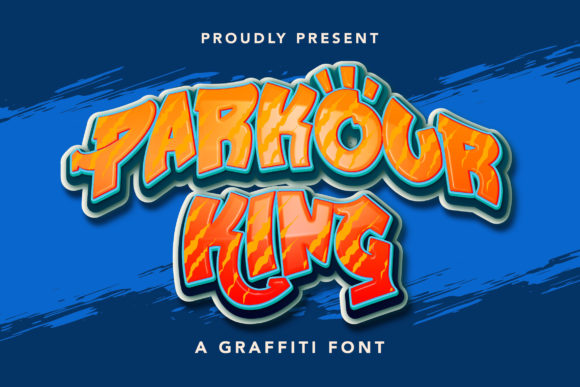
Parkour King carries the weight and attitude of street art lettering translated into a digital format. The thick strokes give each character a commanding presence, while the graffiti-inspired curves and angles inject personality that sterile geometric fonts simply can't replicate. It walks the line between raw creative expression and polished design utility—a balance that's surprisingly hard to find in the world of premium fonts.
One of the most practical aspects of this typeface is its PUA encoding. For anyone who's ever been frustrated trying to access alternate characters, swashes, or decorative glyphs in other fonts, this matters more than you might think. PUA (Private Use Area) encoding means every stylistic flourish, every alternate letterform, every swash is accessible through standard character maps without needing specialized design software. Whether you're working in Adobe Illustrator, Canva, or even a basic word processor, you can pull up and use those extras. That accessibility removes a real barrier for content creators and small business owners who want professional results without a steep learning curve.
Where This Typeface Truly Shines
Think about the projects where you need typography to carry the visual weight. Logo design is an obvious starting point. A brand targeting younger demographics, streetwear markets, fitness communities, or music culture would find this typeface speaks their visual language immediately. Instead of settling for a generic sans serif and layering effects to manufacture personality, you start with letterforms that already have character baked in.
Packaging design is another arena where thick, bold display type proves its worth. On a crowded shelf—whether physical or digital—you have roughly three seconds to communicate what a product is and who it's for. A font like Parkour King doesn't whisper. It announces. Energy drink labels, snack packaging, limited-edition merchandise, and artisanal products with an urban twist all benefit from type that feels alive and immediate.
Social media graphics deserve serious consideration here too. Platforms reward content that stops the scroll, and typography plays a massive role in that. Instagram stories, YouTube thumbnails, TikTok overlays, and promotional banners all need type that reads clearly at small sizes while still feeling distinctive. The thick letterforms of this display font maintain legibility even when compressed into tight spaces, which is a genuine practical advantage over thinner decorative typefaces that fall apart at reduced dimensions.
For web design, you'd use this selectively—hero sections, call-to-action headlines, landing page banners. It's not meant to replace your body copy font, but as a headline companion to a clean serif font or a straightforward sans serif, it creates visual hierarchy that guides the eye exactly where you want it. Blog headers, podcast artwork, and digital product covers all benefit from this kind of strategic contrast.
Matching Typography to Your Brand Identity
Choosing the right font style isn't just an aesthetic decision—it's a branding decision. Every typeface communicates something about values, audience, and positioning before a single word is actually read. A graffiti-inspired display font like Parkour King communicates boldness, creativity, youthfulness, and a willingness to break from convention. That's perfect for some brands and entirely wrong for others.
The key is honest assessment. If you're designing for a law firm or a medical practice, this probably isn't your primary typeface. But if you're building a brand in streetwear, extreme sports, music production, gaming, creative coaching, or any space where energy and authenticity matter, it aligns naturally with those values. Small business owners launching a new product line, content creators building a personal brand, or entrepreneurs developing marketing assets for a youthful audience—these are the people who'll find real value here.
Font pairing is where the practical magic happens. Parkour King works beautifully alongside neutral, understated typefaces. Think of it as the lead vocalist in a band—it needs a solid rhythm section behind it. A clean geometric sans serif for body text, a simple serif for supporting copy, or even a minimal handwritten font for secondary accents can all complement the energy of this display type without creating visual chaos. The contrast between bold and restrained is what produces professional-looking design.
Practical Tips for Working With Bold Display Typefaces
Readability always comes first, regardless of how cool a font looks. With thick display typefaces, spacing becomes critical. Tight kerning can cause heavy letterforms to bleed into each other, while too much tracking makes the text feel disconnected. Test your headlines at the actual size they'll appear—what looks balanced at 120 points on your screen might feel cramped at 30 points on a mobile thumbnail.
Color contrast is another consideration that often gets overlooked. Bold fonts with thick strokes can handle lighter colors against dark backgrounds more effectively than thin typefaces can, but you still need to verify that your text passes basic accessibility standards. White or light-colored Parkour King text on a dark, textured background can look stunning for posters and social media graphics while remaining perfectly readable.
Don't overlook the alternate glyphs and swashes that come with the font. This is where the PUA encoding really pays off. Swashed versions of letters can transform a standard headline into something with genuine movement and flair—perfect for event invitations, poster designs, or merchandise layouts. Experiment with these alternates during the design phase rather than settling for default letterforms. You're paying for the full character set, so use it.
Beyond the Obvious: Unexpected Applications
While headline design is the most common use case, creative professionals are finding compelling applications in less expected places. Editorial layouts for magazines and lookbooks use display typefaces like this for pull quotes and section dividers, adding visual rhythm to multi-page documents. Digital product designers use bold type on ebook covers, course graphics, and online workshop materials to establish a premium feel that justifies pricing.
Print materials—from event posters and flyers to business cards and thank-you notes—benefit from type that carries visual weight without additional graphic elements. A well-set headline in Parkour King can anchor an entire poster design, reducing the need for complex illustrations or expensive photography. For entrepreneurs and hobbyists working with limited budgets, that's a significant practical advantage.
Merchandise design is perhaps where this typeface feels most at home. T-shirts, hats, stickers, tote bags, and phone cases all rely on bold, readable graphics that work from a distance. The thick strokes and street-art sensibility translate naturally to physical products, and the accessible glyph set means you can customize letterforms for unique merchandise designs that don't look like they came from a template.
Making the Most of Your Design Assets
Every font in your collection should earn its place by solving real design problems. Parkour King earns its keep by filling a specific niche: high-energy, attention-demanding typography that bridges the gap between street art aesthetics and commercial design utility. It's not trying to be everything to everyone, and that specificity is actually its strength.
Before committing to any typeface for a branding project, test it across every application you anticipate. Set it in your logo mockup, drop it into a social media template, print it at various sizes, and view it on multiple screens. Typography that looks perfect in isolation sometimes clashes with other design elements in context. The best font pairing decisions come from this kind of hands-on testing rather than theoretical matching.
Review the complete font package before purchasing any commercial font. Check what styles are included—does it offer bold, light, or italic variations? Are there multiple weights? Understanding exactly what you're getting prevents frustration later when you need a variation that doesn't exist. Also verify the licensing terms. If you're creating designs for clients, selling merchandise, or using the font in commercial marketing materials, you need a license that covers those uses. Most premium fonts offer clear commercial licensing, but it's always worth confirming before a project goes to print or a product goes to market.
The right typeface doesn't just decorate a design—it communicates something essential about the project it serves. When you find one that genuinely matches the energy and personality of your work, the entire design process feels more intuitive and the results speak with a clearer voice.