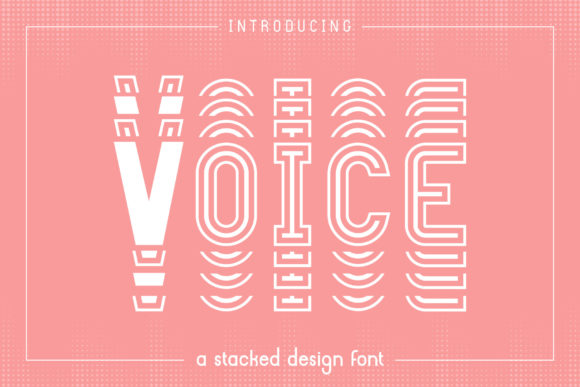
When Letters Overlap: Unleashing Creativity with the Voice Font
There is a specific moment in design where you need to break the grid. You have spent hours aligning pixels, snapping objects to guides, and ensuring every margin is perfect, but the final result feels too sterile. It lacks the human touch, the energy, or the "voice" that makes a brand stand out. This is often the problem with standard corporate typefaces; they are safe, legible, and utterly forgettable. If you are looking to inject some personality into your work—whether you are a small business owner refreshing your identity or a content creator trying to stop the scroll—you need a typeface that dares to be different. Enter the Voice typeface, a display font that throws the rulebook out the window by intentionally overlapping its characters to create a rhythmic, fluid visual experience.
The Anatomy of Overlap: Why It Works
At first glance, the concept of overlapping letters might seem chaotic. In traditional typography, kerning—the spacing between characters—is usually adjusted to ensure letters don't touch, maintaining high readability for long blocks of text. However, Voice isn't designed for body copy in a legal document. It is a display font, meaning its primary job is to grab attention in headlines, logos, and short bursts of text.
The overlapping technique creates a sense of connection and movement. When letters weave in and out of one another, it suggests that the word is a unified object rather than a collection of separate parts. This creates a visual rhythm that feels organic and hand-crafted. For designers and entrepreneurs, this is a powerful tool. It implies authenticity and creativity without the need for complex illustrations. The font does the heavy lifting, turning a simple word like "Sale" or "Welcome" into a piece of graphic art. The distinct style ensures that your visual consistency remains strong, as the font carries its own distinct vibe that can anchor an entire brand identity.
Practical Applications: From Packaging to Pixels
One of the most common questions I hear from clients and fellow creatives is versatility. A font might look beautiful on a mood board, but does it work in the real world? The answer with Voice is a resounding yes, provided you use it in the right context. Because of its bold, overlapping nature, it shines brightest in high-impact areas.
Consider packaging design. In a crowded retail environment or an Etsy search result, your product has milliseconds to make an impression. Using a premium font like Voice for your product name can instantly convey a sense of style. For example, a cosmetic brand could use this typeface to suggest fluidity and elegance, while a streetwear brand might use it to show edginess and movement. It works beautifully on tote bags, t-shirts, and merchandise where the typography needs to be seen from a distance.
In the digital realm, the applications are just as broad. Social media graphics are fleeting, and standard sans-serif fonts often blend into the background noise of a feed. Voice can help your posts stand out. It is perfect for Instagram quotes, sale announcements, or YouTube thumbnails. The overlapping characters create a texture that catches the eye, increasing the likelihood of a pause-scroll-and-read moment. Furthermore, it translates well to web design, particularly for hero sections or landing pages where you want an immediate emotional impact.
Pairing and Readability: The Designer’s Balancing Act
Using a creative font like Voice requires a bit of finesse. If you use an overlapping display font for your headlines, you generally shouldn't use it for your paragraphs. The very thing that makes it beautiful—the interplay of shapes—can make it difficult to read at small sizes or in long sentences. This is where the concept of font pairing becomes essential.
The goal is to balance the personality of Voice with something more neutral. If Voice gives your design its "flavor," a clean sans serif font or a classic serif font provides the "meal." For instance, if you are designing a wedding invitation, you might use Voice for the couple's names to create a romantic, intertwined look, but switch to a legible serif font for the date and venue details. This ensures the information is accessible while maintaining the aesthetic.
When testing your pairings, pay close attention to contrast. You want the display font to stand out against the body text. If you pair Voice with a script font, ensure they have different weights or sizes so they don't compete for attention. The best modern typography relies on this hierarchy: the big, bold, artistic type grabs you, and the clean, simple type informs you.
Real-World Value for Business Owners and Marketers
For the entrepreneur or small business owner, typography is a silent ambassador for your brand. Choosing a commercial font like Voice is an investment in your visual communication. It moves you away from the default system fonts (like Times New Roman or Arial) that signal "generic" to a discerning audience. Instead, it signals that you care about the details.
Think about your marketing assets. Whether you are creating a flyer for a local event, a header for your email newsletter, or a banner for a holiday sale, the font choice dictates the mood. Voice brings an energy that is perfect for lifestyle brands, creative agencies, and personal brands. It helps build brand recognition because it is distinct; once a customer sees that overlapping style, they associate it with your business.
It is also a fantastic asset for digital products. If you sell planners, templates, or educational courses, using a unique typeface for headers can significantly elevate the perceived value of your product. It makes the design feel "finished" and professional, which is crucial for justifying premium pricing.
Final Thoughts on Style and Licensing
Before you download and install, always take a moment to review the specific styles included with the typeface. Display fonts often come with variations—perhaps different weights or stylistic alternates that change how the letters connect. Experimenting with these settings can help you fine-tune the look to match your specific project goals. Also, ensure you are clear on the licensing. If you are using the font for client work or commercial products, verify that your license covers those uses. This protects both you and the font designer.
Ultimately, typography is about voice—literally and figuratively. The Voice font offers a way to speak louder, be bolder, and connect more deeply with your audience through visual design. It is more than just letters; it is a statement piece. Add it to your toolkit, and watch how it transforms your standard designs into something truly memorable.