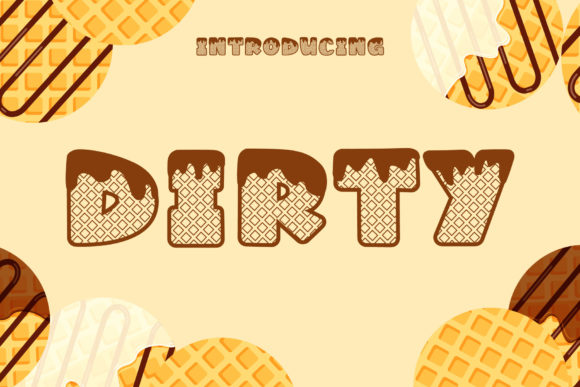
Unleash Your Creative Edge with the Dirty Display Typeface
If you have ever found yourself scrolling through endless libraries of "safe" and "corporate" fonts, only to feel like your design is losing its spark, you are not alone. There is a fine line between professional polish and creative sterility. We often crave a typographic element that feels lived-in, textured, and raw. Enter the solution you have been looking for: the Dirty display font. This typeface is more than just letters on a screen; it is a statement of attitude. Designed to mimic the grit and texture of distressed ink or rough urban surfaces, Dirty offers a cool, fun, and undeniably edgy aesthetic that can transform a flat design into a tactile experience.
Why "Cool and Fun" Typography Matters in Modern Branding
In the current landscape of modern typography, we are seeing a massive shift away from the overly minimal, geometric sans-serifs that dominated the last decade. Today, audiences crave authenticity. They want brands to feel human, approachable, and a little bit rough around the edges. This is where a premium font like Dirty shines. It bridges the gap between high-quality design and raw, street-level authenticity.
Think about the psychology of a display font. Its job is to grab attention immediately. While a sans serif font is excellent for body copy and readability on a website, it often lacks the personality required for a headline that demands to be noticed. Dirty, on the other hand, commands the space. It utilizes texture and imperfection to create visual interest. When a potential customer sees this typeface on a logo design or a piece of packaging, it immediately sets an expectation of creativity and boldness. It tells the viewer that the brand behind the text isn't afraid to stand out.
Practical Applications: From Product Packaging to Social Media
The versatility of the Dirty font is one of its strongest assets. Because it functions as a creative font with high visual impact, it fits into a surprising number of niches. Whether you are a small business owner launching a new line or a content creator looking to spice up your feed, here is how you can practically apply this typeface to your workflow.
Revolutionizing Product Packaging and Merchandise
If you are in the business of packaging design, you know that the shelf is a battlefield. Your product has about three seconds to catch a consumer's eye. Using a standard serif or sans-serif might result in your product blending into the background. However, utilizing a textured display font like Dirty adds a tactile quality to your labels. It works exceptionally well for artisanal goods, craft beverages, streetwear, or beauty products that want to project an "indie" or "edgy" vibe. It makes the packaging feel like a design asset in itself, rather than just a container.
For merchandise, such as T-shirts, tote bags, or hats, Dirty is a natural fit. The distressed look of the letters ensures that the design looks worn-in and comfortable from day one. It provides that vintage rock-and-roll aesthetic that is highly sought after in the apparel industry.
Dominating Social Media Graphics
The algorithm favors engagement, and engagement starts with stopping the scroll. In the realm of social media graphics, standard fonts often get ignored. To create thumb-stopping content for Instagram, TikTok, or Pinterest, you need modern typography that pops. Dirty is perfect for quote graphics, sale announcements, or story backgrounds. It provides high contrast against clean backgrounds, making your message instantly readable and visually interesting. It adds a layer of "cool" to your digital presence that standard system fonts simply cannot provide.
Web Design and Digital Presence
While you wouldn't use a display font for your entire blog post (that would be a readability nightmare), using it strategically in web design can elevate your user experience. Consider using Dirty for your H1 headers, hero section call-to-actions, or section dividers. It breaks up the monotony of long-form text and guides the user's eye down the page. When paired with a clean sans serif font for the body text, it creates a beautiful balance between grit and clarity.
The Art of Font Pairing: Balancing Grit with Clarity
One of the most common mistakes designers make with creative fonts is failing to pair them correctly. Because Dirty has such a strong personality, it requires a supportive partner to maintain readability. If you pair it with another script font or a highly decorative handwritten font, the result will be visual chaos.
The golden rule for pairing a font like Dirty is contrast. You want to let the display font do the heavy lifting for the headlines, and then use a neutral, highly legible typeface for the details. A clean geometric sans serif font (like Helvetica, Futura, or Open Sans) is usually the best choice. This allows the texture of Dirty to shine without overwhelming the reader. For a more classic look, you might even pair it with a sturdy serif font, provided the serif is clean and not overly ornate.
When working on editorial design or magazine layouts, this pairing is crucial. You want the headers to scream for attention, but the sub-headers and body copy need to whisper information clearly. Dirty handles the screaming part perfectly, leaving the rest of the page clean and organized.
Aligning Typography with Project Goals
Choosing the right font is ultimately about communication. You have to ask yourself: what is the goal of this project? If you are designing a wedding invitation for a black-tie gala at the Ritz, Dirty is probably not the right choice. However, if you are designing an invite for a backyard BBQ, a music festival, or a trendy loft party, this font sets the exact right tone.
For brand identity projects, consistency is key. If your brand voice is rebellious, fun, energetic, or artistic, Dirty can become the cornerstone of your visual language. It helps in creating a recognizable silhouette for your brand. Think about famous logos that use texture; they are memorable because they feel physical. By incorporating Dirty into your marketing assets—from business cards to email headers—you create a cohesive ecosystem that feels intentional and professional, despite the "messy" aesthetic of the font.
Technical Considerations and Commercial Use
Before you integrate any new design assets into your professional workflow, you must consider the technical and legal aspects. First, always review the included font styles. Does the typeface come with different weights? Does it include alternates or ligatures? Having multiple versions of the "Dirty" style allows you to customize the look so that two projects using the same font don't look identical.
Second, and most importantly, is licensing. If you are using this font for a personal blog or a hobby project, a personal license is usually fine. However, if you are a business owner or agency creating designs for clients, you absolutely need a commercial font license. This protects you legally and ensures the font creator is compensated for their work. Never use a free download of a premium font for commercial logo design or packaging design; it exposes your business to legal risks.
Final Thoughts on Expressive Typography
Typography is the voice of your design. While clean, neutral fonts are the standard conversation, a font like Dirty is the exclamation point. It is the tool you reach for when you want to express words above the background, making them not just read, but felt. Whether you are designing for magazine covers, creating digital products, or just looking for a way to make your social media pop, embracing a textured, cool typeface can unlock new creative potential. It reminds us that design doesn't always have to be perfect to be beautiful; sometimes, a little bit of "dirty" is exactly what we need to make things look clean.